Chess with Barriersשחמט עם מחסומים
PlayשחקוThis is standard chess with two extra permanent objects per player: a fence (blocks straight lines) and a watchtower (blocks diagonals). On your turn you either move a piece or place one unused barrier on a legal site.
1. Turn structure
- Piece move — all classical rules: pawn moves/captures, castling, en passant, promotion, check, checkmate, stalemate.
- Barrier placement — instead of moving, spend the whole turn to place your fence or watchtower if you still have it. You cannot “pass” if you have a legal piece move and you choose to move; if you have no legal piece move, normal chess outcomes apply (mate/stalemate).
- Barriers are shared topology: once placed they affect both players until the end of the game.
2. Fence (orthogonal barrier)
A fence sits on an edge between two neighbouring squares (horizontal or vertical segment on the grid). It blocks straight sliding and stepping along that line for rook, queen, and king (orthogonal moves). Pawns moving straight forward are blocked if the fence lies on the pushed segment; captures use diagonals and interact with watchtowers instead.
3. Watchtower (diagonal barrier)
A watchtower sits on a vertex (corner where four squares meet). It blocks diagonal lines that pass through that vertex for bishop, queen, king, and pawn captures along affected diagonals.
4. Knight
Knights jump over barriers exactly as they jump over pieces in classical chess. They are the main tactical piece that ignores the new geometry.
5. Inventory & placement law
- Each player begins with one fence and one watchtower.
- No barrier placement while in check — you must defend the king with a piece move.
- Placement must be on the legal interior of the edge/vertex model (the app disallows placements on the outermost ranks of the auxiliary grid).
- You cannot duplicate a barrier on the same edge/vertex.
6. Mate, stalemate, draws
- Checkmate / stalemate — identical definitions to classical chess once legal moves are computed with barriers.
- Threefold repetition — if the same full state (pieces + barriers + side to move + castling rights + en passant availability) occurs three times, the server/client declares a draw.
7. Practical tips
- Watchtowers excel at cutting a long diagonal aimed at your king or pawns.
- Fences excel at breaking a file/rank pin or a rook’s open line.
- Remember permanence — do not wall yourself out of an important square later.
זהו שחמט סטנדרטי עם שני אובייקטים קבועים נוספים לכל שחקן: גדר (חוסמת קווים ישרים) ומגדל (חוסם אלכסונים). בכל תור עושים או מהלך כלי או הצבת מחסום שלא נוצל.
1. מבנה תור
- מהלך כלי — כללים קלאסיים: רגלי, הצרחה, רגלי עובר, הכרה, שח, שחמט, פט.
- הצבת מחסום — במקום הזזת כלי, משקיעים את כל התור בהצבת גדר או מגדל במקום חוקי. לא ניתן «לדלג» על תור אם יש מהלך כלי חוקי ואתם בוחרים לזוז; אם אין מהלך כלי — תוצאות שחמט רגילות.
- מחסומים הם טופולוגיה משותפת — לאחר ההצבה משפיעים על שני הצדדים עד סוף המשחק.
2. הגדר (חסימה אורתוגונלית)
הגדר על קצה בין שתי משבצות סמוכות. היא חוסמת החלקה והצעדה ישרים לאורך הקו לצריח, מלכה ומלך. רגלי קדימה בשורה ישרה נחסם אם הגדר על הקטע; לכידות אלכסוניות קשורות למגדלים.
3. המגדל (חסימה אלכסונית)
המגדל על קודקוד (מפגש ארבע משבצות). חוסם אלכסונים שעוברים בו לרץ, מלכה, מלך ולכידות רגלי רלוונטיות.
4. הפרש
הפרש מדלג מעל מחסומים כמו מעל כלים בשחמט רגיל.
5. מלאי וחוק הצבה
- גדר אחת ומגדל אחד לכל שחקן.
- אסור להציב מחסום בשח — יש לצאת מהשח עם כלי.
- ההצבה רק בתוך אזור פנימי חוקי של מערכת הקצוות/קודקודים.
- לא ניתן לשכפל מחסום באותו קצה/קודקוד.
6. שחמט, פט, תיקו
- שחמט / פט — כמו בשחמט רגיל לאחר חישוב מהלכים חוקיים עם מחסומים.
- תיקו מחזוריות — חזרת אותה עמדה מלאה שלוש פעמים.
7. טיפים פרקטיים
- מגדל טוב לחיתוך אלכסון ארוך לעבר המלך או רגלי.
- גדר טובה לשבירת נעיצה או קו צריח.
- זכרו: מחסום נשאר לנצח — אל תסתמו מסלול שתצטרכו.
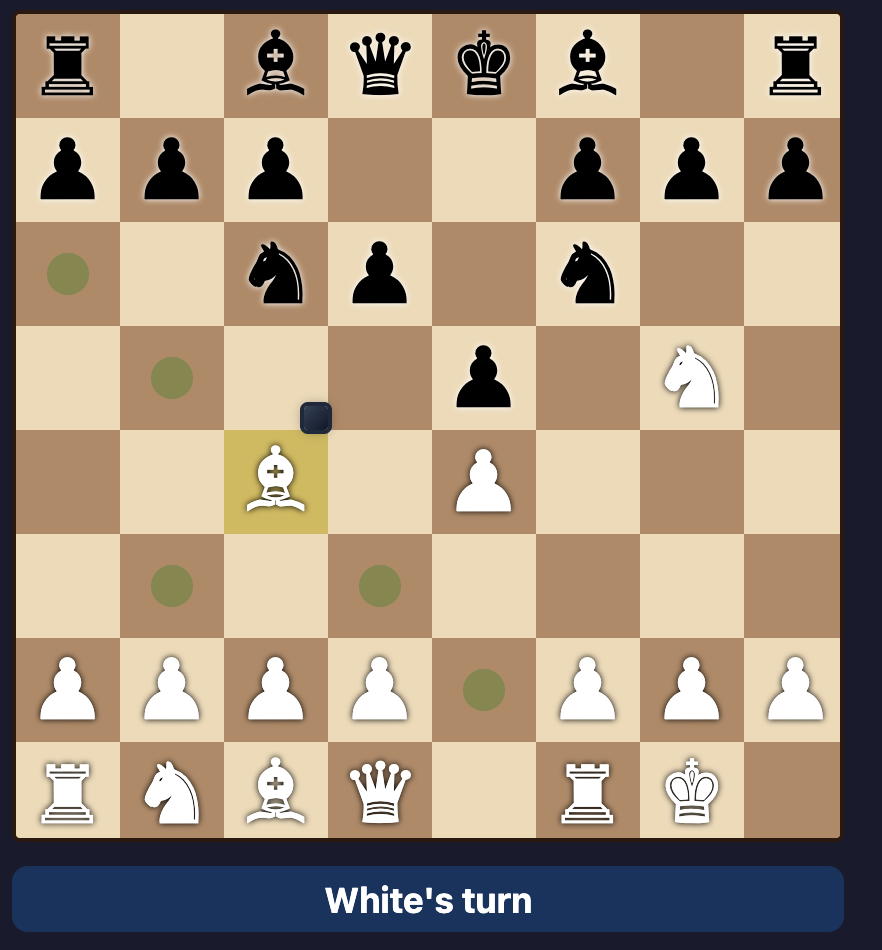
Example 1 — Cutting a “Fried Liver” style diagonal
White develops toward a classic strike on f7 (bishop + knight eyeing the king-side). Instead of answering with only piece moves, Black invests a tempo to place a watchtower on the critical vertex. The bishop’s diagonal is physically cut: the pressure line no longer exists, so the old tactic never “arrives” even though the pieces are still on the board.
Before the diagram: read the sample move list below — it mirrors a plausible development where Black’s barrier placement is the thematic move.
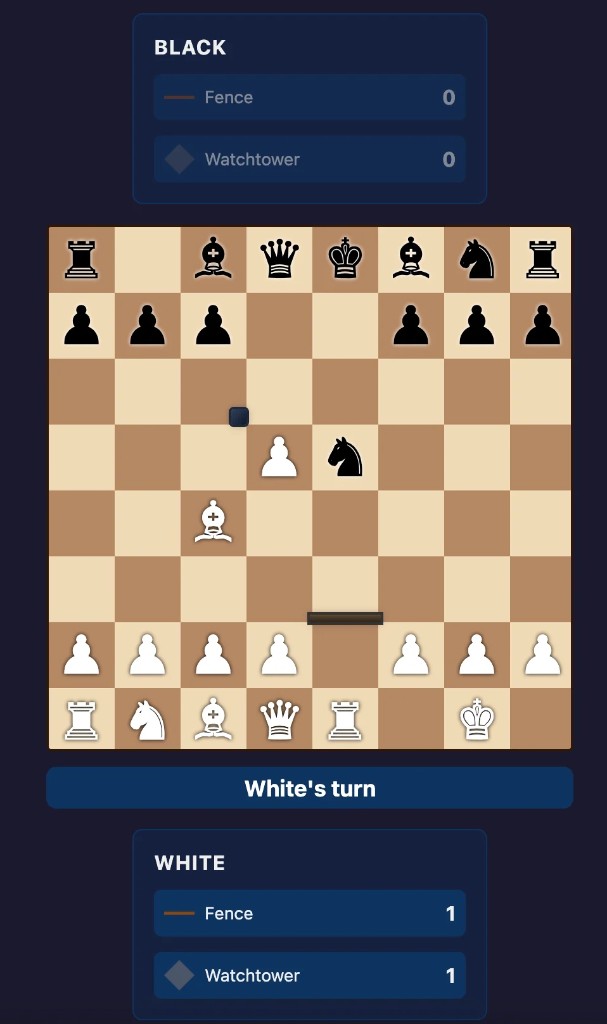
Short motion graphic (schematic — not a full engine replay)
The knight’s jump ignores the fence; the animation is only a visual metaphor for “changing geometry while knights still hop”.
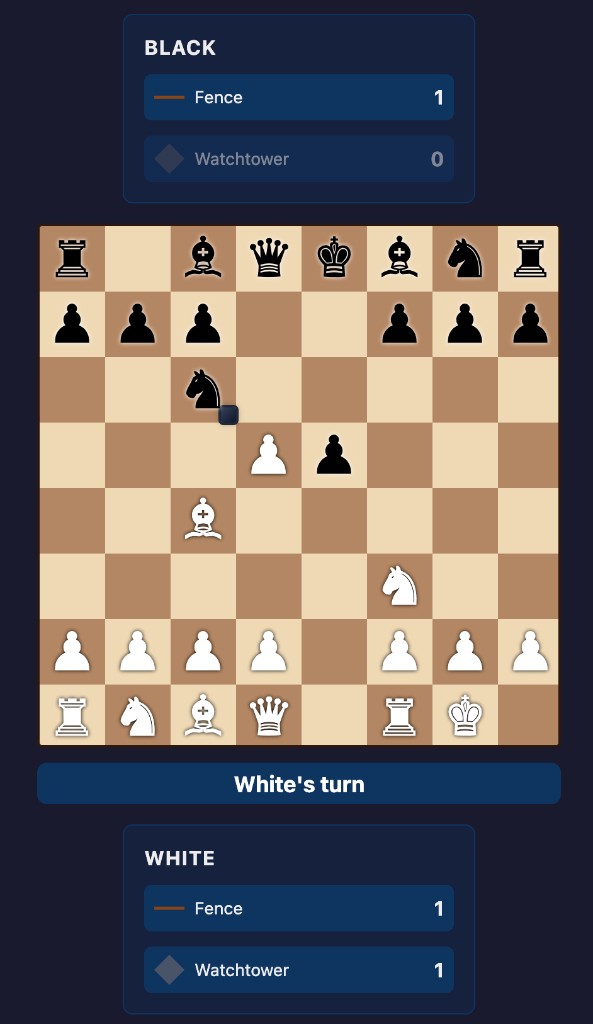
Example 2 — Neutralising a pawn tension with a watchtower
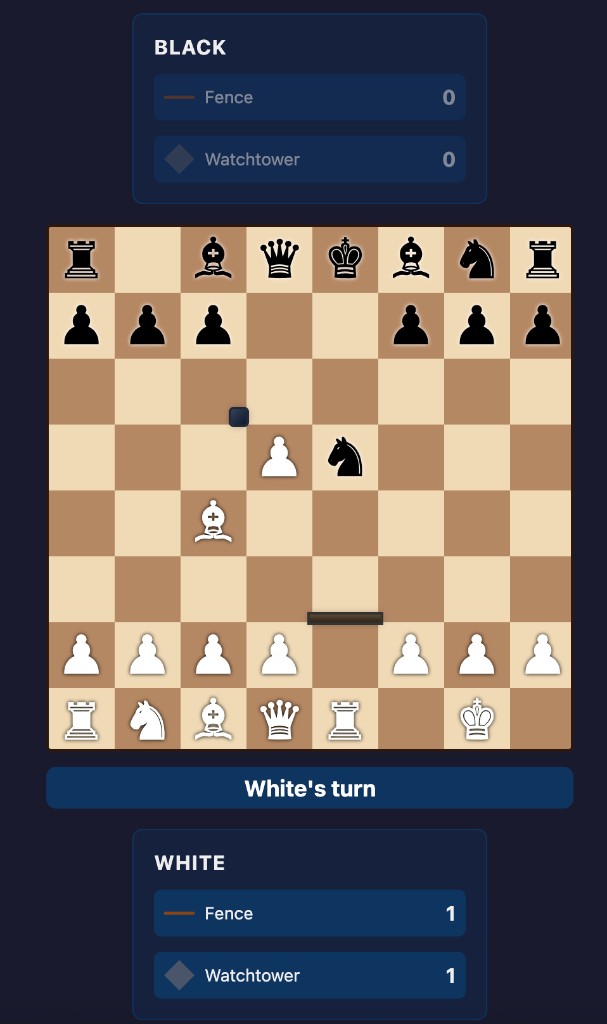
White’s pawn would win space or harass Black’s knight. Instead of moving the knight away, Black drops a watchtower on the vertex so the diagonal relation is severed; the knight keeps the square while the pawn’s “pressure” evaporates.
Before the diagram: identify the pawn and the diagonal the defender cares about — the watchtower is aimed at that vertex, not at the pawn’s square itself.
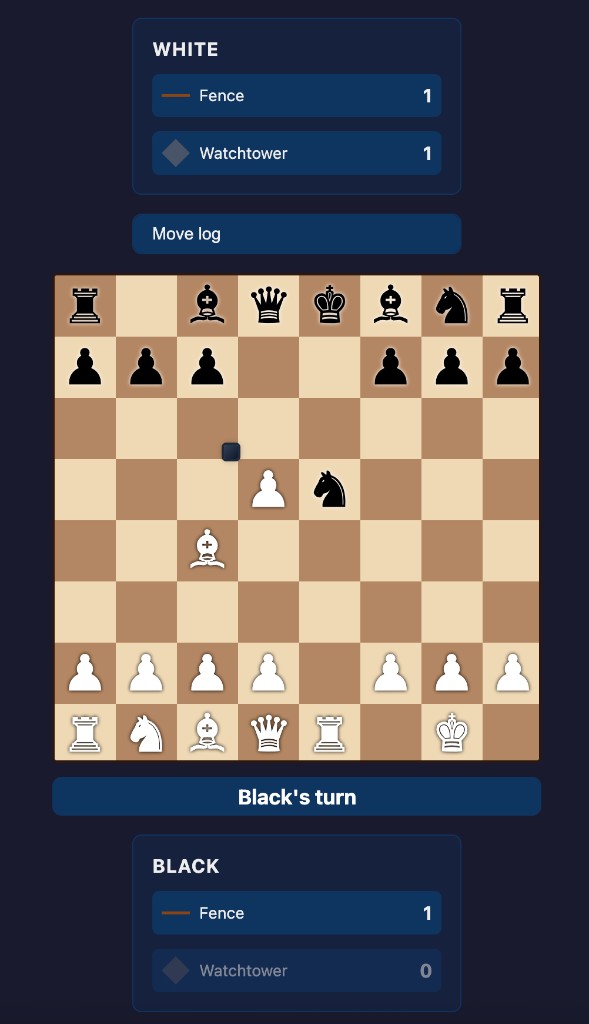
Example 3 — Breaking a pin with a fence
White has a rook on the e-file pinning Black’s knight to the king. Black spends a tempo on a horizontal fence on an edge so the rook’s orthogonal line of sight is broken. Knights still jump — the tactical landscape changes completely.
Before the diagrams: first imagine the pin without barriers; then see how a single edge barrier removes the pin’s “ray”.
דוגמה 1 — חיתוך איום אלכסוני (סגנון «כבד שכונה»)
לבן מתפתח לעבר מתקפה קלאסית על f7 (רץ + פרש); השחור משקיע תור במגדל על הקודקוד הקריטי. האלכסון של הרץ נחתך פיזית — האיום נעלם גם אם הכלים עדיין על הלוח.
לפני התמונה: קראו את רשימת המהלכים למטה — היא משקפת פיתוח אפשרי שבו הצבת המגדל היא המהלך התמטי.
אנימציה קצרה (תרשים בלבד — לא ניגון מלא במנוע)
הפרש מדלג מעל הגדר; האנימציה היא מטאפורה ויזואלית ל«שינוי גיאומטריה בעוד פרשים קופצים».
דוגמה 2 — ניטרול מתח של רגלי עם מגדל
רגלי לבן יוצר לחץ על פרש שחור. במקום להזיז את הפרש, השחור מציב מגדל על קודקוד כך שהיחס האלכסוני נחתך — הפרש נשאר על המשבצת.
לפני התמונה: זיהו את הרגלי ואת האלכסון שההגנה תלויה בו — המגדל מכוון לקודקוד, לא למשבצת הרגלי עצמה.
דוגמה 3 — שבירת נעיצה עם גדר
ללבן צריח על קו e שמנעץ את הפרש השחור למלך. השחור משקיע תור בגדר אופקית על קצה כך שקו הראייה האורתוגונלי של הצריח נקטע. הפרש עדיין יכול לדלג.
לפני התמונות: דמיינו את הנעיצה בלי מחסומים, ואז איך גדר אחת מסירה את «קרן» הנעיצה.
This tab embeds the same game client in ?embed=live mode: it auto-starts local PvP on the same device so you can experiment freely. Planned next: curated puzzles and lessons that open in the same shell.
Note: the iframe needs a few seconds to connect to the game server (Socket.io). If it stays blank, reload once.
כאן מוטמע אותו לקוח משחק במצב ?embed=live: הוא מתחיל אוטומטית מולטיפלייר מקומי לאותו מכשיר לצורך ניסויים. בשלב הבא: חידות ושיעורים מובנים באותו מעטפת.
הערה: ה־iframe צריך כמה שניות להתחבר לשרת (Socket.io). אם נשאר ריק — רענון אחד.
Chess with Barriers is a classical chess variant that foregrounds spatial judgement: you reshape the board’s topology with a small number of permanent obstacles — one fence (orthogonal) and one watchtower (diagonal) per player — while knights keep their familiar jumping behavior.
The result is a lively, modern skirmish where deep preparation matters less than concrete over-the-board decisions. Barriers are shared infrastructure: a line you cut for your opponent is a line you live with as well, so every placement is a commitment.
This guide matches v1.0.0 of the reference implementation.
שחמט עם מחסומים הוא וריאנט קלאסי שמדגיש שיקול מרחבי: משנים את טופולוגיית הלוח עם מעט מחסומים קבועים — גדר אחת (ישר) ומגדל אחד (אלכסון) לכל שחקן — בעוד שהפרש נשאר עם קפיצותיו המוכרות.
מתקבלת דינמיקה עכשווית ומהירה, שבה החלטות בשטח גוברות על הכנת פתיחות ארוכה. המחסומים הם תשתית משותפת: קו שחותכים ליריב הוא קו שתצטרכו לחיות איתו גם אתם, ולכן כל הצבה היא התחייבות.
המדריך תואם לv1.0.0 של המימוש.